Published November 2026 | Last Updated November 2026
TL;DR: Often, yes, but not with whatever is in your bathroom cabinet. Studies show aligners can act as whitening trays, Align approves one professional system for use with Invisalign, and clinicians differ on whether to start now or wait until treatment ends. Ask your dentist to choose the product and the timing so the result is even.
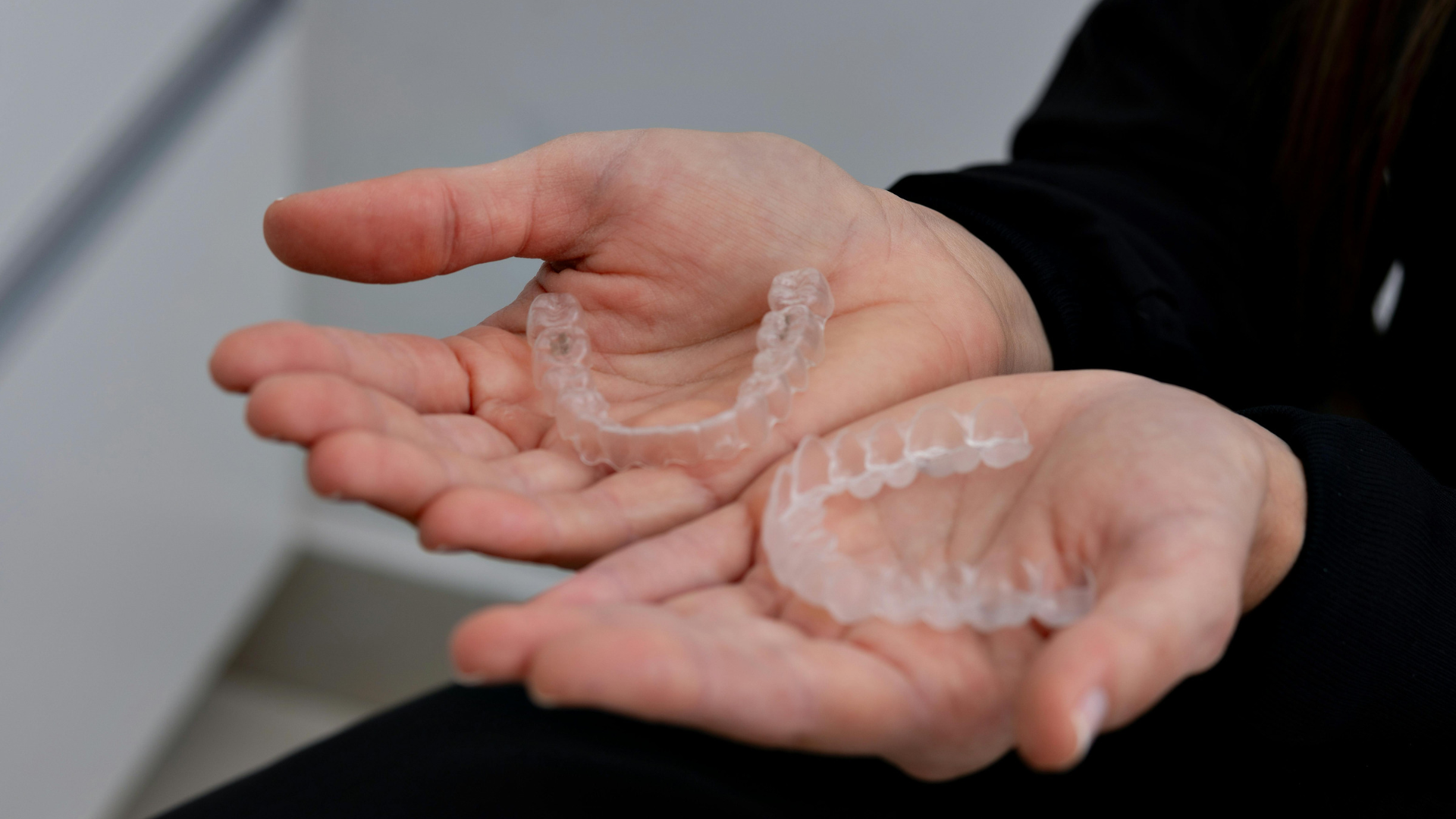
Often yes, with your dentist's supervision. Studies show clear aligners can work as whitening trays, and Align approves one professional whitening system for use with Invisalign, though attachments stay their original shade and some clinicians prefer to wait until treatment ends.
Quick Answer: Don't improvise. Ask your dentist whether to whiten now or at the end of treatment, and which gel is made for use in aligners.
Key Takeaways
- A 2022 systematic review found that every included clinical study showed better tooth shade when aligners were used as bleaching trays, though it covered only a few small studies
- Align says its professional whitening system can be used before, during, or after treatment, including with attachments bonded
- Composite attachments don't bleach, and a 2026 lab study found they stain more easily than natural tooth surface
- A 2019 clinical report advised waiting until the end of treatment when front attachments are planned
- Whitening strips and gels not made for aligners are worth asking about before you try them
Thinking about whitening during Invisalign? Book a consultation at Bryant Street Dental or call (650) 327-1787.
Patients often ask halfway through aligner treatment whether they can brighten their teeth while they're at it. It's a fair question, and the honest answer is "yes, if it's planned."
This guide explains what the research and Align's own guidance say about whitening during
Invisalign in Palo Alto, and what to ask before you start. For how long treatment takes and how often you change trays, see our guide to
how many Invisalign trays you'll need.
Is It Safe to Whiten Your Teeth While Wearing Invisalign?
Usually, when a dentist supervises it. A 2022 systematic review found every included clinical study showed improved tooth shade when aligners were used as bleaching trays, but it covered only a few small studies, so ask your dentist to choose the product and the timing.
The review found improved tooth shade in all the included studies, and other studies using aligners for bleaching showed no adverse effects on the gums or on sensitivity that disrupted treatment (Khashashneh et al., 2022). It also noted that only one study compared aligners with standard whitening trays.
A later review of three clinical studies, about 76 patients, found no significant difference in color change between aligner-based and conventional trays. It rated the evidence as having serious risk of bias, so treat the results as encouraging rather than settled (systematic review).
A clinical report from the University of Ferrara tested peroxide sprayed into aligners on 38 volunteers. The aligners kept their transparency after 14 days, and the authors saw no intolerable side effects (JCO, 2019).
What Do Attachments and Aligners Do to Whitening Results?
Composite attachments don't bleach, so after whitening they can look darker than the surrounding tooth, while aligners themselves seem to limit staining while worn. Align says its system works with attachments bonded, and some clinicians would rather wait until the end of treatment.
A 2026 laboratory study on extracted premolars found that composite attachments increased susceptibility to discoloration, while aligners showed a protective effect by limiting color change. Bleaching with a 6% hydrogen peroxide gel applied through aligners reduced the discoloration, and the authors said bleaching may be recommended without waiting for attachments to be removed (PubMed).
Align's provider page says its professional whitening system can be applied at any point during treatment, including after attachments are bonded (Invisalign). The 2019
JCO report took a more cautious view: if front attachments are planned, postpone whitening to the end and use the final aligner as the tray.
That disagreement is real, and it's why timing is a conversation with your dentist, not a rule. Two reasonable plans exist: whiten under supervision during treatment, or finish the movement first and whiten with the final aligner or a custom tray.
What Whitening Options Work With Invisalign, and What Should You Avoid?
The best-studied route is a peroxide gel your dentist chooses for use in aligners or custom trays, applied on the schedule they set. Ask before you try strips or off-the-shelf gels, because they weren't designed for aligner wear and attachments can make the results uneven.
| Option | Fits aligner treatment? | What to know |
|---|---|---|
| Professional system made for aligners | Yes, under supervision | Align names one system, a 10% carbamide peroxide product, as the only professional system it approves for use with Invisalign |
| Custom whitening trays after treatment | Yes | Made once your teeth have finished moving |
| Final aligner or retainer as the tray | Yes, dentist-directed | The approach the 2019 report suggested when front attachments are planned |
| Whitening strips | Ask first | Designed to be used without aligners in, and attachments change how they sit |
| Gels not approved for aligners | Ask first | Align says a popular Ultradent gel isn't approved for use with Invisalign aligners |
Align's provider page says its system is the only professional teeth whitening system it approves for combined use with Invisalign aligners and Vivera retainers. It adds that a separate Ultradent product isn't approved for use with them.
Habits matter as much as products. Our guide says to take your aligners out for anything except plain water, then rinse before putting them back in, because drinks trapped under the plastic can stain your teeth and the aligners.
This article is general information, not dental advice. Whitening during aligner treatment depends on your teeth, your attachments, and your plan, so check with your dentist before using any product.
How Do You Start Whitening During Invisalign in Palo Alto?
Tell your dentist you're interested at the consultation or at your next check-in, and let them choose the product and timing based on your attachments and treatment plan. If you're not in treatment yet, mention whitening when the plan is made.
What to do first:
- Ask about timing. Whiten during treatment under supervision, or wait and use the final aligner or a custom tray.
- Ask about the product. Which gel is made for use in aligners, and does the office use it?
- Ask about attachments. How will they look after whitening, and what's the plan if the shade difference shows?
- Mention sensitivity. Tell us if cold drinks or brushing already bother you, since tooth movement can make teeth tender.
- Where we are. 824 Bryant St, University South, Palo Alto, CA 94301. Open Monday to Thursday, 9:00 am to 5:00 pm. Call (650) 327-1787.
Frequently Asked Questions
Can you whiten your teeth while wearing Invisalign?
Often, with your dentist's supervision. Studies show clear aligners can work as whitening trays, and Align approves one professional system for use with Invisalign. Your dentist chooses the product and timing based on your attachments and plan.
Do Invisalign attachments whiten?
No. Attachments are tooth-colored composite, which bleaching gel doesn't lighten, so they can look darker once the surrounding teeth brighten. Ask your dentist how timing and matching will be handled.
Can I use whitening strips with Invisalign?
Ask your dentist first. Strips are designed to be used without aligners in, and attachments change how they sit, while a gel made for use in aligners is the better-studied route.
Can I put whitening gel in my aligners?
Only a gel your dentist approves. Align names one professional system as approved for combined use with Invisalign, and says another popular gel isn't approved for use with its aligners.
Should I whiten before, during, or after Invisalign?
Align says its system can be used before, during, or after treatment, even with attachments bonded. A 2019 clinical report advised waiting until the end when front attachments are planned, so your dentist should match the timing to your plan.
Will whitening make my teeth sensitive during Invisalign?
It can, since sensitivity is a known effect of peroxide and tooth movement can already make teeth tender. Reviews of aligner-based bleaching found no adverse effects that disrupted treatment, but few studies exist, so tell your dentist about existing sensitivity.
How do I start whitening during Invisalign in Palo Alto?
Call Bryant Street Dental at (650) 327-1787 or use our contact page, and mention whitening at your consultation or next check-in. Your dentist will choose the product and timing for your plan.
Trust & Authority
About the Dentist
Dr. Chad Abed leads Bryant Street Dental in Palo Alto and has more than 21 years of experience, according to the practice.
Meet the doctor.
We'd rather you ask before putting gel in your trays, because the product and the timing decide whether the result is even. We see patients from across Palo Alto at 824 Bryant St, 94301.
Summary and Next Step
Whitening during Invisalign can work, but it should be planned: the product, the timing, and the attachments all matter. Ask your dentist which gel is made for aligners and whether to start now or at the end.
Ready to talk about a brighter smile alongside a straighter one?
Book a consultation at Bryant Street Dental, 824 Bryant St, Palo Alto, CA 94301, or call (650) 327-1787.
This is educational content, not a diagnosis. Whitening safety, product choice, and timing during Invisalign vary by individual and by treatment plan. A comprehensive evaluation by Dr. Chad Abed is required to determine whether and when whitening is right for you.
Blog | Bryant St Dental