Searching for a cosmetic dentist in Palo Alto usually means you already know you want a better smile — you're just not sure which treatment gets you there. Direct answer: whitening is the fastest, least invasive option for brightening the color of your natural teeth; bonding is a same-visit fix for small chips, gaps, and discoloration on individual teeth; and veneers are the most durable option when you want to reshape or dramatically brighten several teeth at once. The right choice depends on whether your concern is color, shape, or both.
Quick Answer: If your teeth are the right shape but the wrong shade, start with whitening. If one or two teeth have a chip, gap, or stain that whitening won't fix, bonding is usually enough. If you want a complete, long-lasting transformation across several teeth, veneers are the stronger investment.
Teeth Whitening: The Starting Point for Most Smiles
If you're exploring cosmetic dentistry in Palo Alto for the first time, whitening is usually the lowest-commitment place to start. In-office bleaching uses a stronger concentration than take-home kits, while a dentist-supervised at-home tray can take anywhere from a few days to a few weeks to reach full results.
- Best for teeth that are stained or dulled by coffee, tea, wine, or age — not for teeth that are chipped, gapped, or misshapen
- No enamel is removed, and the effect is reversible — your natural tooth color will gradually return over time
- Look for a whitening product carrying the ADA Seal of Acceptance, whether you're doing it in-office or at home
One catch: whitening only works on natural tooth enamel. If you're also considering bonding or veneers, whiten first — bleaching gel doesn't change the color of composite resin or porcelain once it's already on the tooth.
Dental Bonding: The Same-Day Fix for Small Flaws
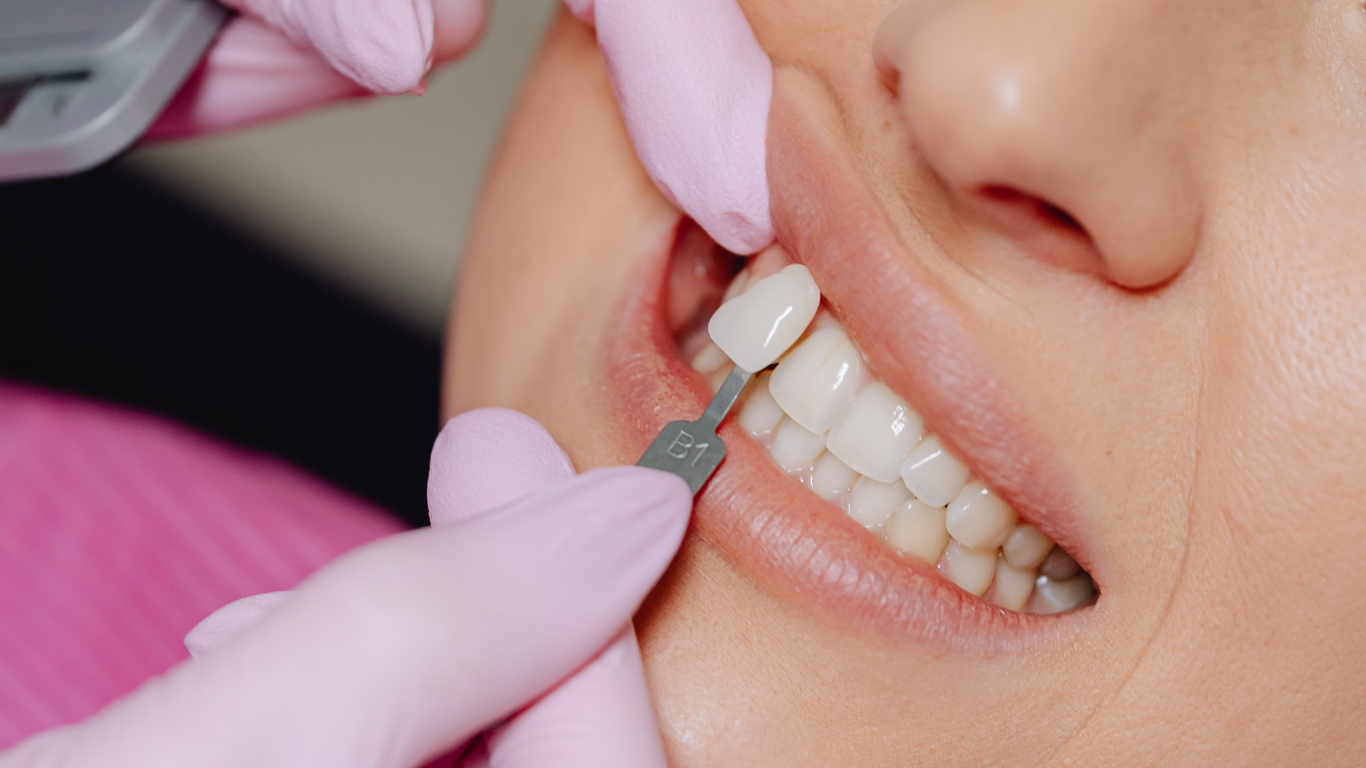
Bonding uses a tooth-colored composite resin that's sculpted directly onto the tooth, hardened with a curing light, and polished to blend in. It's the right call for a chipped edge, a small gap, or a single discolored spot that whitening can't touch.
- Typically completed in under an hour per tooth, often in one visit
- No anesthesia needed in most cases
- Composite bonding averages 5 to 7 years before it needs to be touched up or replaced — noticeably less than veneers, but at a lower cost and with no enamel removal
Bonding is a good test run, too: it's reversible-ish (your dentist can adjust or replace it without reshaping the underlying tooth the way a veneer requires), which makes it a lower-stakes way to address one or two flaws before committing to a bigger treatment plan.
Porcelain Veneers: The Long-Term Transformation
Veneers are thin, custom-fabricated shells bonded to the front of your teeth — the option most people picture when they think "smile makeover." A veneer is designed to look natural while resisting stains far better than your untreated enamel would.
- Ideal for teeth that are stained in a way whitening can't fix, chipped, worn down, gapped, or slightly uneven in shape
- Placing a veneer is not reversible, because your dentist removes a small amount of enamel to make room for the shell — a real tradeoff worth discussing before you commit
- Porcelain veneers typically last 10 to 15 years, with well-cared-for veneers often performing well past 20 years, while composite veneers run closer to 5 to 7 years
- A peer-reviewed follow-up study found ceramic veneers bonded fully to enamel had a 99% survival rate over 12 years — a strong argument for enamel preservation during the fitting process
Because the treatment is permanent, veneers make the most sense when you're addressing shape and color together, not just color on its own.
Side-by-Side: What Actually Separates the Three
| Whitening | Bonding | Veneers | |
|---|---|---|---|
| Fixes | Color only | Chips, small gaps, single-tooth stains | Color, shape, and alignment together |
| Reversible? | Yes | Mostly | No — enamel is removed |
| Typical lifespan | Fades gradually; touch-ups as needed | 5–7 years | 10–15+ years (porcelain) |
| Visits | 1–2 | Often 1 | Usually 2 |
How to Actually Decide
Bring these three questions to your consultation:
- Is my concern about color, shape, or both? Color alone points to whitening. Shape or a mix of both points to bonding or veneers.
- How many teeth are involved? One or two isolated flaws often don't justify the cost or permanence of veneers.
- How long do I want this to last, and what's my budget? Whitening needs the most frequent upkeep; veneers need the least, but ask upfront about pricing and financing since they're the bigger investment.
A comprehensive exam is really the only way to know for certain — your dentist can tell you whether your enamel, bite, and gum health support the treatment you have in mind before you commit to it.
Frequently Asked Questions
What's the difference between veneers and bonding?
Bonding applies a tooth-colored resin directly to your existing tooth and is completed in one visit; veneers are custom-made shells that require removing a small amount of enamel and are typically placed over two visits. Veneers last longer and resist stains better, but the process is not reversible.
How long do veneers last compared to bonding?
Porcelain veneers typically last 10 to 15 years, sometimes longer with good care, while composite bonding averages 5 to 7 years before it needs touching up or replacing.
Can teeth whitening fix discolored old fillings, bonding, or veneers?
No. Whitening only changes the color of natural tooth enamel — it won't lighten composite resin or porcelain. If whitening is part of your plan, it should happen before bonding or veneers so your new work matches your brightened natural teeth.
Is bonding or veneers cheaper?
Bonding is generally the lower-cost option upfront since it uses less material and fewer visits, but veneers tend to need replacement far less often, which can narrow the cost gap over the years.
How many dental visits do veneers take?
Most veneer cases take two visits: one for enamel preparation, impressions, and a temporary veneer, and a second to bond the finished custom veneer.
Will dental insurance cover veneers, bonding, or whitening?
Cosmetic treatments are usually not covered by dental insurance since they're considered elective rather than medically necessary, though some plans make exceptions when a treatment also restores function (for example, bonding after a chip). Check with your insurance provider and ask about financing options at your dentist's office.
About the Dentist
Dr. Chad Abed has practiced dentistry for more than 21 years and leads Bryant St Dental in Palo Alto. He is a graduate of the University of Michigan and the University of Detroit Mercy, and completed two additional years of postgraduate training in advanced oral surgery at the University of Florida and West Virginia University. Dr. Abed and his team have been recognized with the Best Dentistry Award in both 2023 and 2024, and the practice is a Diamond Plus, Top 1% Invisalign provider.
This article is for general informational purposes and is not a substitute for professional dental advice or an in-person exam. Bryant St Dental makes no representations about the completeness, accuracy, or applicability of this information to any individual's dental situation. Talk with your dentist about which treatment, if any, is right for you.
Ready to Talk Through Your Options?
Whether it's a brighter shade, a fixed chip, or a full smile makeover, the fastest way to know which treatment actually fits is a real conversation with a
cosmetic dentist in Palo Alto. Schedule a consultation with Bryant St Dental at (650) 327-1787 to find out where you stand.
This content is provided for general informational purposes only and does not constitute medical or dental advice. Treatment comparisons, lifespan estimates, and cost ranges for whitening, bonding, and veneers discussed here are general guidelines and may not reflect your individual case. Only a dentist can determine which treatment is appropriate after an in-person exam of your teeth, enamel, and gum health. Provider credentials, awards, and practice details referenced are accurate as of publication but may change over time. Always consult a qualified dental professional, such as the team at Bryant St Dental, before deciding on a cosmetic treatment plan.
Blog | Bryant St Dental