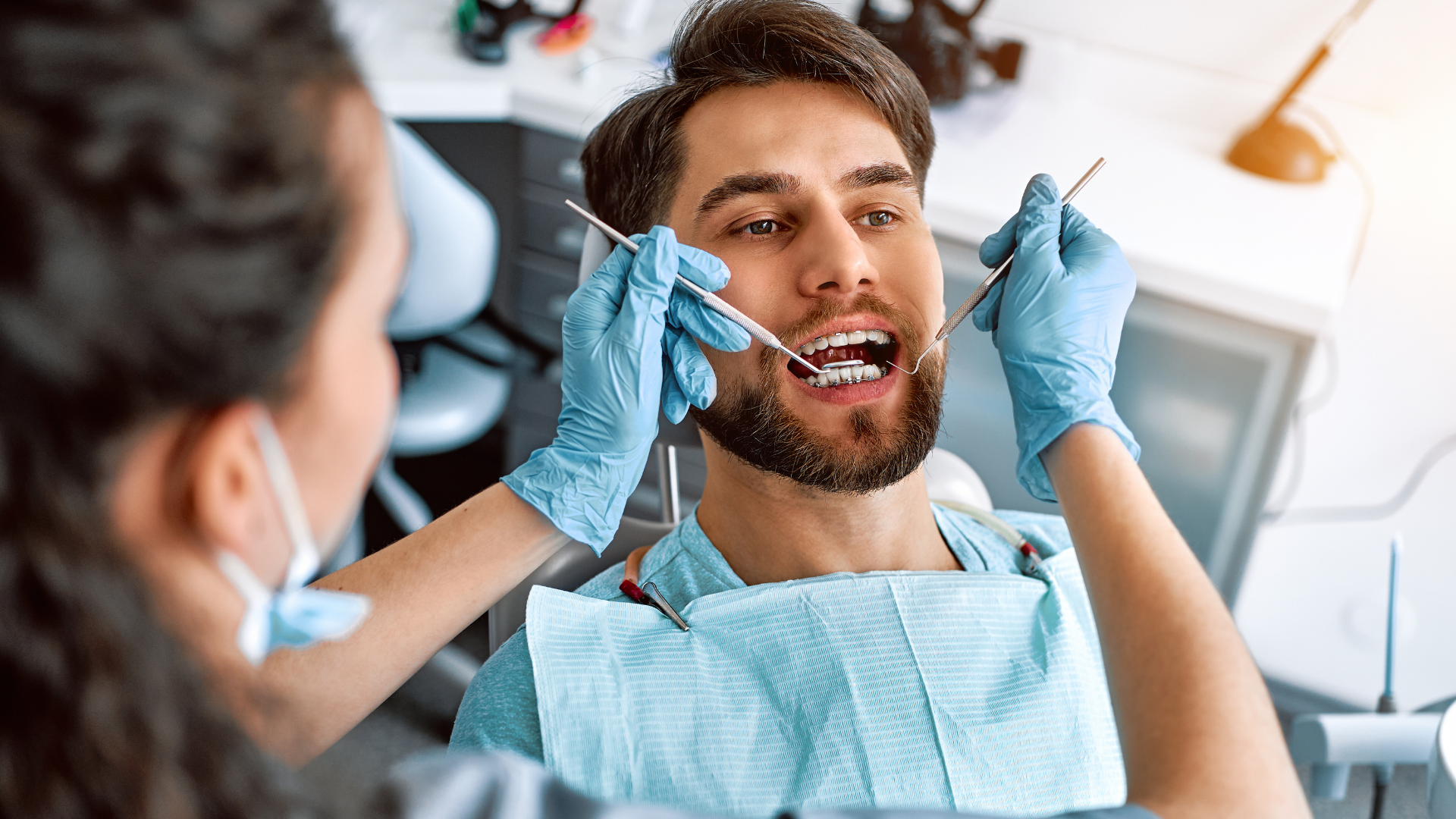
Gum disease and receding gums don't automatically rule out Invisalign, but they change the plan: active disease is treated before any teeth are moved, and thin or receding gums raise the risk of further recession. A gum exam before you start shows whether to proceed, wait, or involve a gum specialist.
Quick Answer: Get your gums checked before you get aligners. Treat active disease first, plan around thin or receding gums, and keep up cleanings during treatment.
Key Takeaways
- Active gum disease is treated first, so teeth aren't moved through inflamed tissue
- Treated, well-controlled gum disease is often not a barrier to tooth movement
- Thin gum tissue is the main risk factor for recession during orthodontic treatment
- Severe gum disease is where guidance favors braces over aligners
Planning Invisalign and not sure about your gums? Schedule an Invisalign consultation or call (650) 327-1787. Mention any bleeding, recession, or past gum treatment when you book.
Most people check their teeth before starting Invisalign. Fewer check their gums, and that's the part that can change the plan.
If you're weighing
Invisalign in Palo Alto, this page covers how gum health shapes your treatment and what to sort out before the first aligner goes in.
Does Gum Disease or Receding Gums Rule Out Invisalign?
In most cases, no, as long as the order of treatment is right. Current periodontal guidance moves teeth only after gum disease is under control, reserves extra caution for thin or receding tissue, and favors braces over aligners when disease is severe.
A 2025 expert consensus on orthodontic treatment for patients with periodontal disease sets out the principles. Tooth movement follows effective periodontal therapy, and in patients with
well-controlled periodontitis, moving teeth did not significantly worsen gum inflammation, recession, or root resorption in the evidence it reviewed (International Journal of Oral Science, 2025).
For clear aligners specifically, the consensus notes that evidence is limited, mostly case reports and small series in patients with mild periodontal damage. It suggests aligners may suit mild to moderate periodontitis, while European Federation of Periodontology guidance favors fixed appliances in severe (stage IV) disease, where tighter control of tooth movement is needed.
A literature review reaches the same order of operations: in patients with periodontal disease, initial periodontal therapy has to come before orthodontic treatment (Journal of Dental Sciences, 2025).
Receding gums are a different question. A 2024 review in the British Dental Journal reports that
a thin gum phenotype is associated with a higher risk of recession during orthodontic treatment (British Dental Journal, 2024).
These patients may need combined orthodontic and periodontal planning, with gum surgery before tooth movement in selected cases.
A 2025 cross-sectional study found recession in 68% of patients with thin gum tissue, compared with 25% of those with thick tissue (BMC Oral Health, 2025). After accounting for gum type, bleeding on probing, and age,
tooth movement itself was not a significant factor.
What Should You Sort Out Before Starting Invisalign?
Start with a gum exam covering probing depths, bleeding, recession, and X-rays of the bone around your teeth, then treat any active disease before aligners are ordered. From there, the plan accounts for thin tissue, sets a cleaning schedule, and shows whether to proceed, wait, or bring in a gum specialist or braces.
| Your gum situation | What it usually means for Invisalign | What to ask |
|---|---|---|
| Healthy gums, no recession | Usually straightforward; routine cleanings continue | How often to schedule cleanings during treatment |
| Gingivitis (red, bleeding gums, no bone loss) | Inflammation is treated first with cleaning and better home care, then treatment can usually begin | How long to wait, and what you'll need to do at home |
| Active gum disease (periodontitis) | Treated before teeth are moved; timing depends on how you respond | What treatment is planned and how success is judged before aligners start |
| Treated, stable gum disease | Often not a barrier when well controlled; closer monitoring and maintenance | What maintenance visits look like during treatment |
| Thin gums or existing recession | Higher risk of more recession; plans may favor gentler movement, limit how far front teeth move out, or involve a gum specialist | Whether any movement will be limited, and whether grafting should come first |
| Severe gum disease with advanced bone loss | Guidance favors fixed appliances over removable ones | Whether braces, a periodontist, or an orthodontist should be involved |
If gum disease is found, Bryant St Dental offers laser-assisted periodontal therapy (LANAP) among its treatment options, as described on our laser periodontal therapy page. Your dentist will recommend the approach that fits your stage.
For more on that option, our guide to how laser gum treatment can save your smile explains what to expect.
Two more things belong on the checklist. The first is black triangles, the small open spaces that can appear at the gum line between teeth after straightening, particularly in adults.
Ask your dentist whether your plan carries that risk before treatment begins. If they do appear, our black triangle treatment page covers the options.
The second is your home routine. A 2026 meta-analysis found
lower plaque and gum-inflammation scores with aligners than with fixed braces (BDJ Open, 2026).
An umbrella review calls the overall periodontal effect comparable (Healthcare, 2023). The cleaning advantage holds only if you brush before putting your aligners back in.
If you recognize your situation in the table, a consultation is the quickest way to find out where you stand.
How Do You Book an Invisalign Consultation in Palo Alto?
You can book online through Schedule Your Consultation or by calling our Palo Alto office at (650) 327-1787. The first visit covers an exam, X-rays, a digital scan, and a review of insurance, HSA and FSA options, and financing, and your personalized treatment plan comes from that visit.
For consultation, wear, and cleaning basics, our guide to
what to know before getting Invisalign covers the rest.
- The visit. A comprehensive exam, X-rays, and digital scanning, followed by a conversation about your goals and a personalized plan. If your gums need attention first, that step is planned before aligners, so you see the whole sequence up front.
- Insurance and payment. We accept most insurance providers and can help verify your coverage once you send your details. FSA and HSA funds can often be used for orthodontic care, and financing options are outlined on our Invisalign financing page.
- What to bring. Your insurance information, a list of any gum treatment you've had, and recent X-rays from another dentist if you have them.
- Hours. Monday through Thursday, 9:00 am to 5:00 pm. Call (650) 327-1787 if you're not sure which day suits you.
Frequently Asked Questions
Can I get Invisalign if I have gum disease?
Often, once the disease is under control, because teeth shouldn't be moved through inflamed tissue. Treated, stable gum disease is usually manageable with closer monitoring, while severe disease with advanced bone loss may be better served by braces.
Can Invisalign make receding gums worse?
In some people, particularly those with thin gum tissue and when front teeth are moved outward. A 2025 study found gum type, bleeding on probing, and age mattered more than tooth movement itself, and your dentist can plan gentler movement or involve a gum specialist.
Will Invisalign fix receding gums?
No. Aligners move teeth, not gum tissue, so recession is treated separately, sometimes with a gum graft.
Moving a tooth that sits outside its bony housing back into position can remove one contributing factor, but whether that helps depends on your case.
Are clear aligners better for your gums than braces?
Somewhat. A 2026 meta-analysis found lower plaque and gum-inflammation scores with aligners than with fixed braces.
An umbrella review calls the overall effect comparable, and the advantage depends on brushing before you reinsert your aligners.
What are black triangles, and can Invisalign cause them?
They're small open spaces at the gum line between teeth, and they can appear when teeth are straightened, particularly in adults. Ask your dentist whether your plan carries that risk and what can be done to reduce it.
Does insurance cover Invisalign or gum treatment?
Coverage varies by plan, and some plans cover a portion of orthodontic treatment, while gum treatment is often handled as separate periodontal care. Send us your insurance details and we'll help verify your coverage.
FSA and HSA funds can often be used for orthodontic care.
How do I schedule a consultation, and what should I tell you about my gums?
Use Schedule Your Consultation on our website or call (650) 327-1787, and mention any bleeding, recession, or past gum treatment when you book. Bring your insurance information and any recent X-rays from another dentist.
Trust & Authority
About the Dentist
Dr. Chad Abed, DDS has practiced dentistry for more than 21 years. A graduate of the University of Michigan and the University of Detroit-Mercy, he completed two additional years of postgraduate training in advanced oral surgery at the University of Florida and West Virginia University.
Before co-founding Bryant St Dental in Palo Alto with Ela Abed, he built his career in private practice in Manhattan. He has spoken to fellow dentists at the San Diego Dental Society and the San Francisco Dental Society, and to the public through WomenHeart Palo Alto.
According to the practice, Bryant St Dental is a Diamond Plus Invisalign provider and treats more than 400 Invisalign cases a year.
Read more about Dr. Abed.
We see Invisalign patients from across Palo Alto and the 94301 area. The ones whose treatment runs most smoothly are often those who had their gums looked at before the first tray was ordered.
Summary and Next Step
Gum disease and receding gums don't close the door on Invisalign. They set the sequence: treat active disease, build a plan around thin tissue, and keep up regular cleanings while your teeth move.
Ready to find out where your gums stand?
Schedule your Invisalign consultation
with Bryant St Dental, 824 Bryant St, University South, Palo Alto, CA 94301.
Call (650) 327-1787, Monday through Thursday, 9:00 am to 5:00 pm.
This is educational content, not a diagnosis. Gum health and readiness for Invisalign vary by individual. A comprehensive evaluation by Dr. Chad Abed is required to determine whether gum disease treatment is needed before starting aligners.
Blog | Bryant St Dental